
Applied Narratology Communications
Applied narratology communications uses narrative theory to analyze stories — for better communication.
Communications has changed.
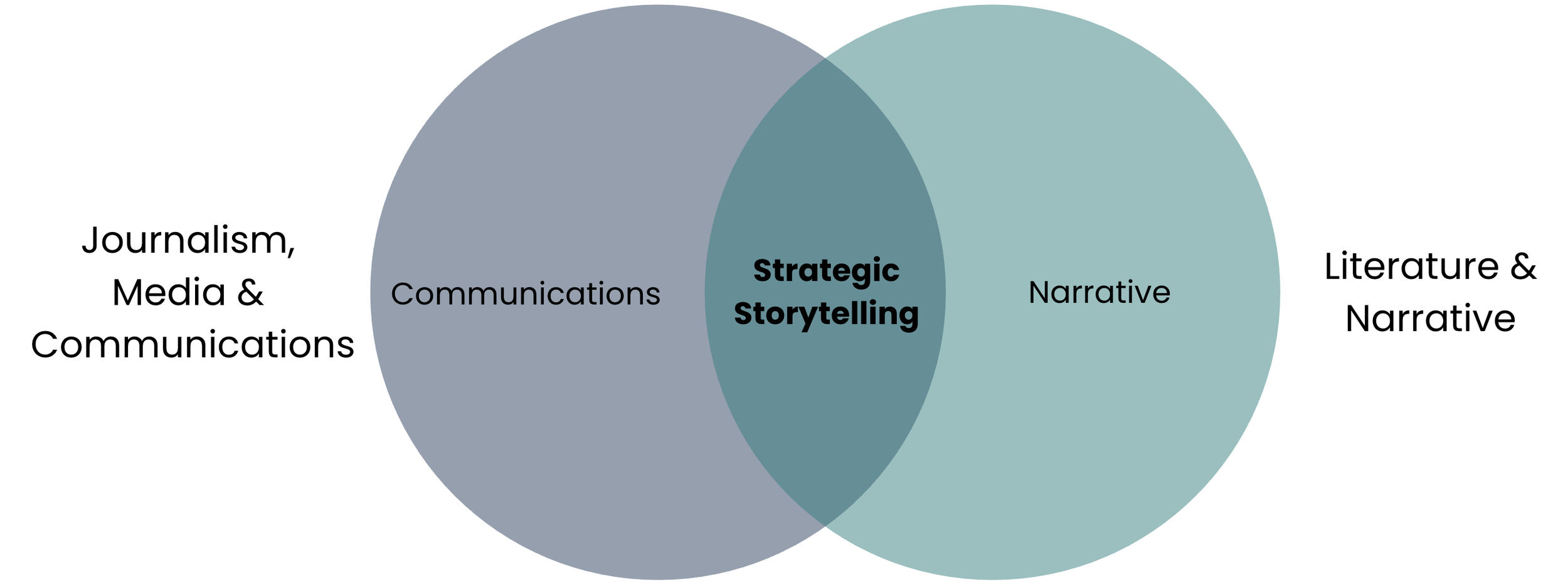
Strategic storytelling sits at the intersection of communications and narrative.
Communications
Product: statements
More efficient
Requires less interpretation
Harder to remember
Concerned with distinctions (is/is not)
Describes states
Storytelling
Product: stories
Less efficient
Requires more interpretation
Easier to remember
Concerned with relationships (cause + effect)
Describes change
Generates knowledge
FAQ
-
Traditional organizational communications produces statements, whereas organizational storytelling produces stories. Statements and stories communicate different types of information.
Statements are stories are useful in different ways: statements are more useful when communicating information about stable environments, stories are more useful when communicating information about changing environments.
-
No — it depends on what you are communicating.
Storytelling is commonly used by change organizations — such as nonprofits and social change organizations — as it is very difficult to describe human impact or change without telling a story.
However, statements are more efficient at communicating information than stories — so they are preferred when not communicating change.
-
There is no consensus yet on industry standards and best practices, however Tell Ethical Stories — a project of No Lip Service — is a good place to start.
-
Story-Modeling™ is a method to produce useful stories: stories about real events that are useful. Learn more about Story-Modeling™.