
Ethical Storytelling
Telling stories about real people — narrated by organizations — without causing harm.
NLS Ethical Story-Modeling™ is a narrative-first approach to ethical impact storytelling.
As impact storytelling becomes a norm in communications, ethical storytelling is increasingly important:
Telling a person’s life story — narrated by an organization — can impact their narrative agency (the ability to make independent decisions about how they see the world and their place in it)
A power dynamic is always present between a nonprofit and someone who benefits from the nonprofit, creating the potential for unintended exploitation
When certain types of stories can translate to financial gain (e.g. donations), an organization can find its operational needs in opposition to ethical storytelling practices
Organizational storytelling sits at the intersection of communications: creating narrative text, but using it to benefit an organization. The best practices communicators borrowed from journalism and media don’t extend to the ethical issues that are raised by this specific practice, including narrative agency, identity and exploitation.
Learn more about ethical storytelling at Tell Ethical Stories.
NLS Ethical Story-Modeling™
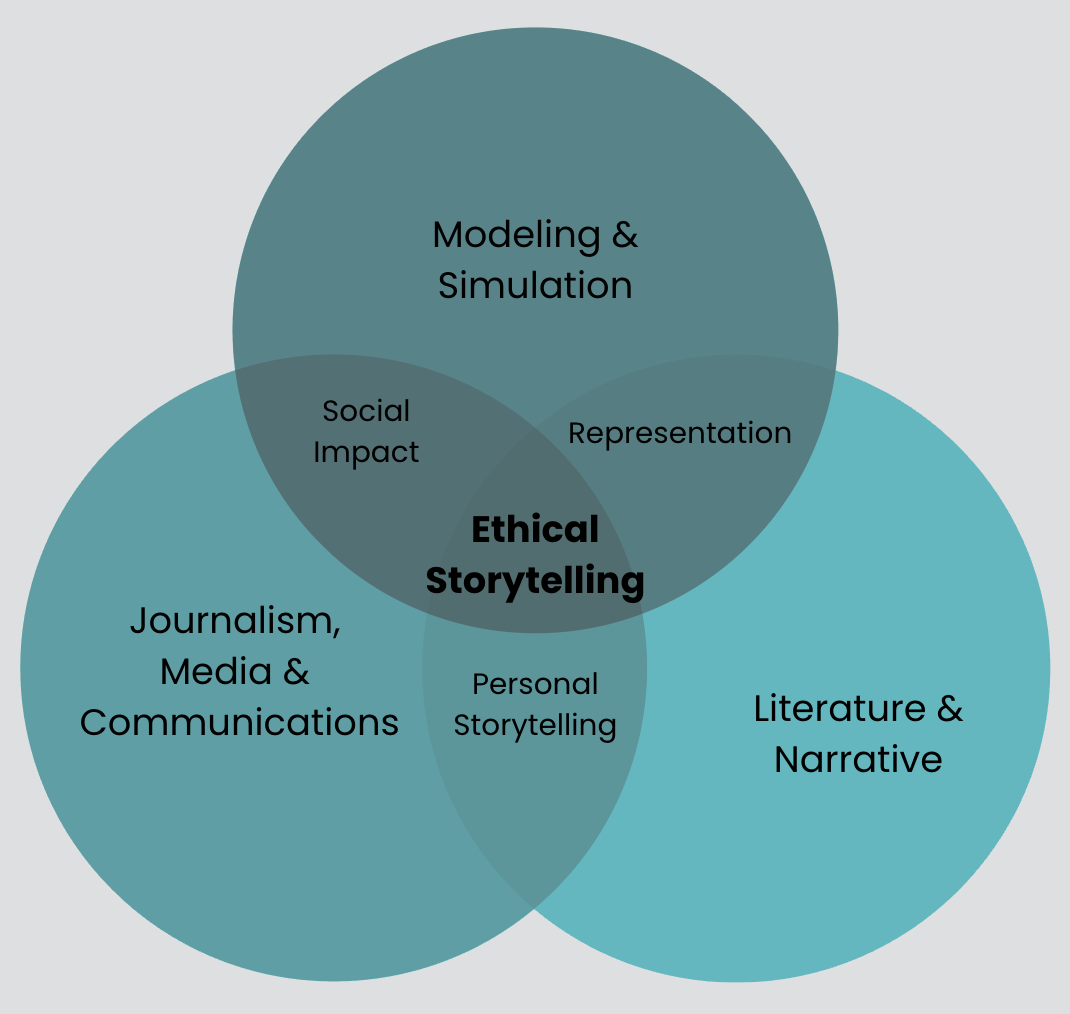
NLS Ethical Story-Modeling™ is an intersectional, narrative-first framework for ethical impact storytelling at your nonprofit, NGO or social change organization:
A narrative-first approach recognizes that the best stories come from prioritizing narrative first; it doesn’t matter how well you communicate a story if it doesn’t work
Story-Modeling™ is an approach to storytelling that understands how stories work as scientific models when they are used to generate knowledge about the real world.
An intersectional approach to storytelling recognizes that impact stories are not literature or publicity or a scientific model: they’re all three.
By applying what we already know about ethics in Modeling & Simulation, Literature and Narrative and Journalism, Media & Communications, NLS Ethical Story-Modeling™ is the storytelling program that addresses ethical risk in all aspects of current storytelling practices.
NLS Ethical Story-Modeling™ has been developed over 20 years’ storytelling experience in the nonprofit sector. Start a conversation about your organization’s needs here.
NLS Ethical Story-Modeling™ Principles
Based on ethical principles of Literature & Narrative, Journalism, Media & Communications, and Modeling & Simulation.
Stories are how we “make sense” of the world.
Narrative holds power.
Instrumentalization does not equate ownership.
Everyone has a right to privacy.
A power imbalance is inherent.
Change organizations need to tell stories.
Organizational storytelling is not the press.
Public storytelling is publicity.
Stories are biased.
The teller is responsible.
“All models are wrong — but some are useful.” — George Box
FAQ
-
Tell Ethical Stories is a project of No Lip Service and a place to find resources, reports organizations and research on ethical storytelling.
-
You can learn more at Tell Ethical Stories, or request a training here.
-
There is no consensus yet on industry standards and best practices. Storytelling in communications emerged quickly as a result of Web 2.0, before best practices were established. Learn more at TellEthicalStories.com.