
Narrative Communications
Impact stories | Founder + CEO stories | Origin stories | Member stories | Movement stories | Brand story
Organizational communications that includes storytelling.
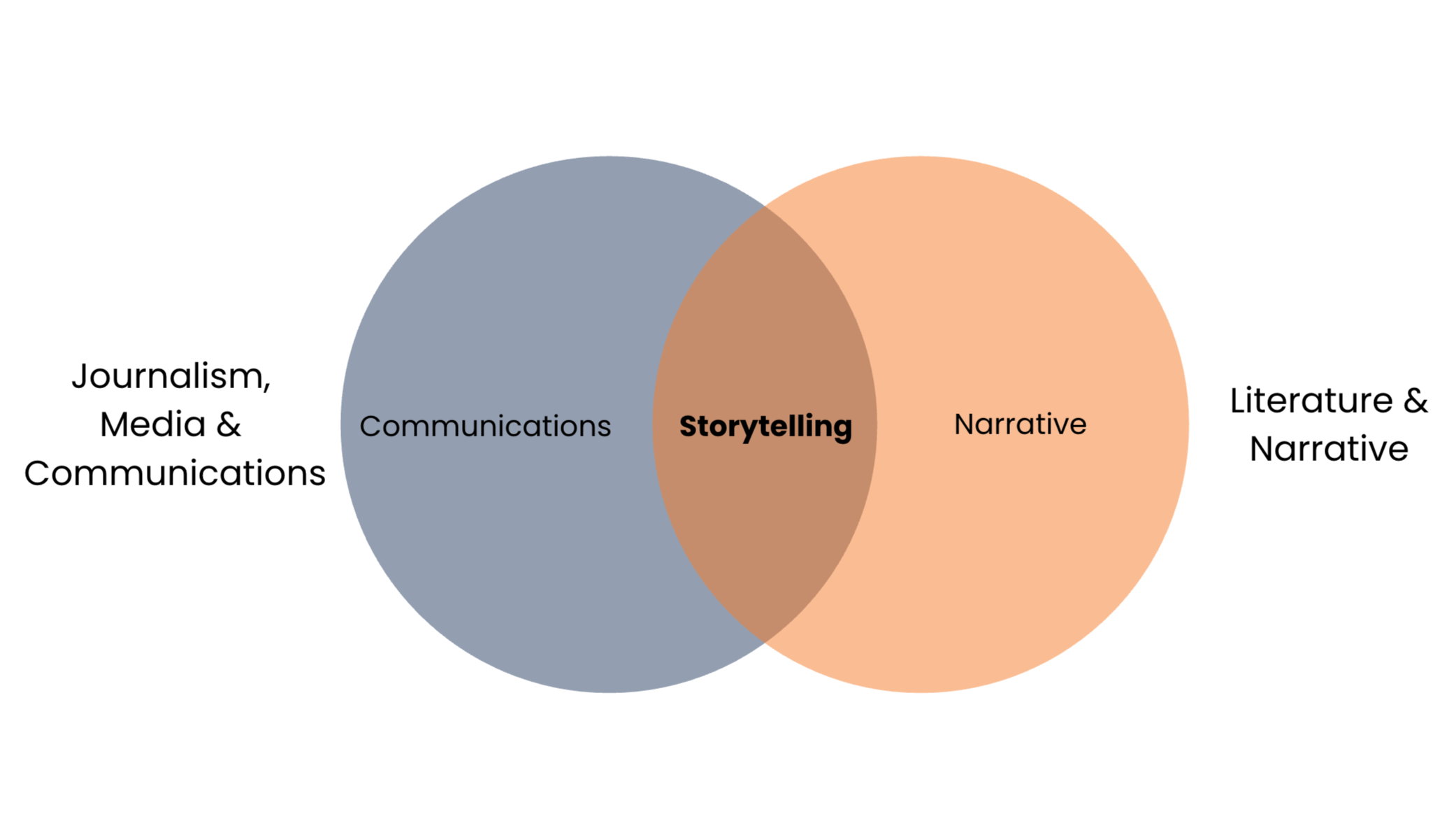
Organizational storytelling sits at the intersection of communications and narrative.
Today, many organizations — especially nonprofits and social change organizations — are expected to include storytelling with their communications.
Organizational storytelling has become the solution to information that is difficult to communicate. The impact of an organization’s work or a social issue on an economy or the environment can be communicated with reports and data, but human impact can only be described effectively with a story. Similarly, change of any kind of practically impossible to describe outside of a story.
Organizational storytelling became a norm in communications practice after digital media and Web 2.0 created audience expectations for organizations to communicate with stories about people, not just with reports and data. As the internet became awash with personal storytelling — on blogs, video sharing and social media platforms — donors, funders and supporters also wanted to see personal storytelling to describe the work they were supporting.
When an organization narrates a story about someone’s life — for the benefit of the organization — ethical concerns are raised, however the practice became established before ethical standards were; organizations are encouraged to proceed with care.
Narrative Communications
Communications
Best for sharing information
Product: statements
More efficient
Requires less interpretation
Harder to remember
Concerned with distinctions (is/is not)
Describes states
Storytelling
Best for generating effect
Product: stories
Less efficient
Requires more interpretation
Easier to remember
Concerned with relationships (cause + effect)
Describes change
Generates experience (embodied simulation)
Generates knowledge (simulation learning)
FAQ
-
Traditional organizational communications produces statements, whereas organizational storytelling produces stories. Statements and stories communicate different types of information.
Statements are stories are useful in different ways: statements are more useful when communicating information about stable environments, stories are more useful when communicating information about changing environments.
-
No — it depends on what you are communicating.
Storytelling is commonly used by change organizations — such as nonprofits and social change organizations — as it is very difficult to describe human impact or change without telling a story.
However, statements are more efficient at communicating information than stories — so they are preferred when not communicating change.
-
There is no consensus yet on industry standards and best practices, however Tell Ethical Stories — a project of No Lip Service — is a good place to start.
-
Story-Modeling™ is a method to produce useful stories: stories about real events that are useful. Learn more about Story-Modeling™.